
 English
 русский
 Español


Home / News / Industry News / EU Battery Digital Passport Compliance: Label and Data Carrier Standards
News

EU Battery Digital Passport Compliance: Label and Data Carrier Standards
2026-11-11
February 2027 may still feel like a long way off, but the work behind the EU battery digital passport is already reshaping how batteries are identified, labelled and tracked. Under Regulation (EU) 2023/1542, the passport is not simply an IT project. It is a physical-to-digital handshake: a durable mark on the battery, a unique identifier, and a structured record that stays useful through manufacture, service, repair and recycling. In our experience as a label and RFID supplier, the projects that go smoothly are the ones where the label is treated as part of the compliance design, not as an afterthought.
The passport in plain terms
The battery passport is a digital record for a battery, accessible through a data carrier, primarily a QR code. It sits under the EU Battery Regulation rather than the broader Digital Product Passport framework under ESPR, although the two will increasingly share thinking around identifiers, data access and lifecycle information. The battery passport becomes mandatory on 18 February 2027 for EV batteries, LMT batteries and industrial batteries with a capacity above 2 kWh.
| Battery category | Passport required from 18 February 2027 | Practical label and data carrier focus |
|---|---|---|
| EV batteries | Yes | Durable QR code, unique identifier, long service-life legibility |
| LMT batteries | Yes | Compact QR placement, wear and moisture resistance |
| Industrial batteries above 2 kWh | Yes | Harsh-environment label, chemical and temperature resistance |
| Portable batteries and smaller industrial batteries | Not under the passport rule, though other labelling duties apply | Compliance marks, collection symbol, clear product identification |
The record itself covers general battery and manufacturer information, performance and durability data, carbon footprint and recycled content information, and state-of-health data. Access is tiered: some information is public, some is available to persons with a legitimate interest, and some is reserved for authorities and notified bodies. That means the identifier on the battery has to be reliable, but it also has to be readable in the real world, after years of vibration, heat, moisture and handling.
What the regulation expects on the battery
Article 77 establishes the passport, while the labelling requirements in Article 13 and Annex XIII set out what must appear on the battery itself. Depending on the battery type, this includes the manufacturer’s name and address, battery type, date of manufacture, capacity, chemistry, hazardous substances, the separate collection symbol and the QR code. The information must be durable and legible. That sounds straightforward until you are working on a battery housing that sees high temperatures, coolant exposure or outdoor weathering.
A common mistake is to design a beautiful digital record and then specify a label that cannot survive the product. The QR code is the entry point. If it delaminates, fades or becomes unreadable, the passport may exist but the user cannot reach it. Compliance standards therefore need to be read alongside material standards, print quality standards and application testing.
Standards that matter for the physical label
For the QR code itself, ISO/IEC 18004 defines the symbol, and ISO/IEC 15415 provides a common way to grade print quality. A QR code that looks fine on a screen can fail when printed small, on a textured surface, or with low contrast. For unique identification, ISO/IEC 15459 is a useful reference point for structuring identifiers. These standards do not replace the legal text, but they give label converters, battery makers and integrators a shared language for verification.
The label construction matters just as much. Battery labels may need flame-retardant face materials, high-temperature adhesives, chemical resistance and good dimensional stability. Placement is part of the design too: a recessed area, a curved housing or a cell surface near a heat source will each demand a different adhesive and overlaminate. We often recommend testing the finished label on the actual substrate, not on a sample plaque, because surface energy and contamination can change adhesion dramatically.
 High-Temperature Flame-Retardant Battery Label MaterialsDesigned for lithium battery packs and energy storage, these labels combine flame-retardant substrates with high-temperature adhesives for safety traceability.View Product →
For teams comparing face stocks and adhesives, our guide to adhesive label materials is a practical companion to the compliance discussion. It walks through the questions we ask before recommending a construction, from temperature range and chemical contact to expected service life.
QR, NFC and RFID: choosing the data carrier layer
The regulation’s default access route is the QR code, so the physical label must carry a compliant, readable code. NFC and RFID can add value, but they should not be presented as a simple replacement unless the legal text and the battery passport system explicitly allow it. In practice, we see three layers working together: QR for universal access, NFC for close-range service or consumer interaction, and UHF RFID for production, warehouse and logistics visibility.
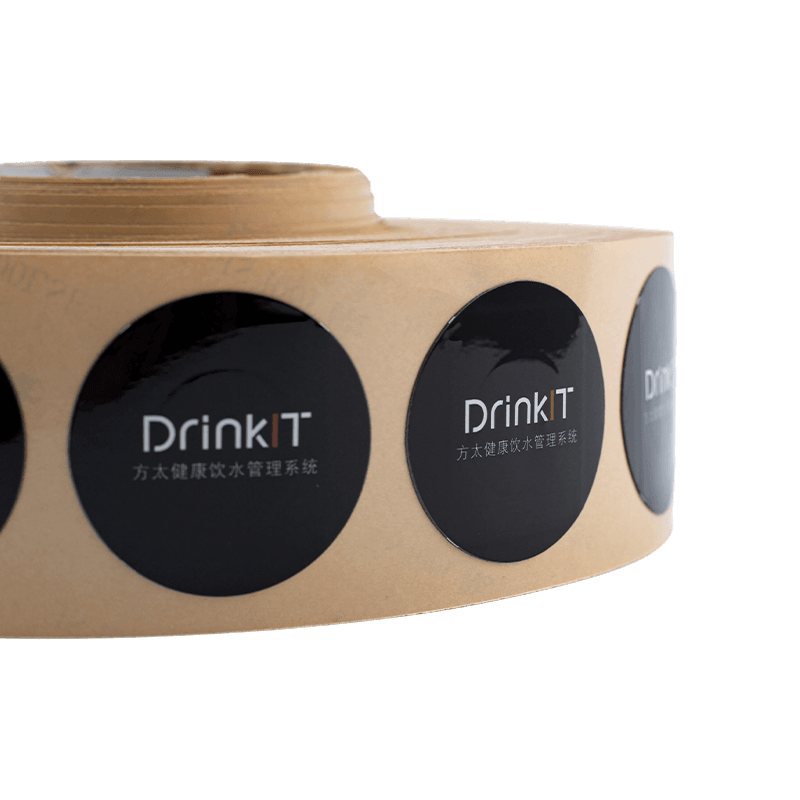 NFC Anti-Counterfeiting and Interactive Brand LabelsThese NFC labels support tap-to-verify authentication, traceability and digital engagement, complementing QR access while protecting inlays on battery packs.View Product →
NFC labels are useful when a technician or user needs a quick tap-to-open experience, or when a manufacturer wants to combine passport access with service history and authentication. ISO/IEC 14443 is the relevant contactless standard for many NFC use cases. The label design still has to protect the inlay from bending, heat and metal interference, especially on battery packs with conductive housings.
UHF RFID, often based on ISO/IEC 18000-63, is better suited to reading many items at once across a production line or warehouse. It can help link a physical battery to its passport record during assembly, quality checks and shipment. Again, the inlay and label construction must be matched to the surface. A tag that works on a cardboard box may behave very differently on a metal battery enclosure.
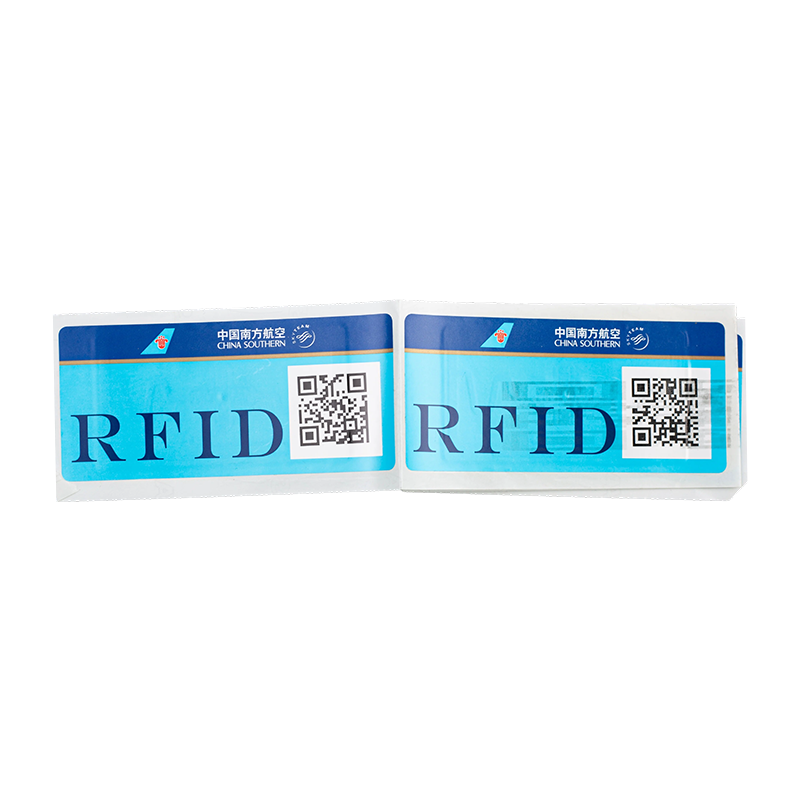 Aviation and Logistics UHF RFID Tracking LabelsUHF RFID labels for baggage and cargo tracking offer metal- and liquid-resistant reads, supporting automated sorting, loading and supply-chain visibility.View Product →
Our advice is to start with the legal requirement, then add the data carrier that solves a real operational problem. Do not let a pilot project with NFC or RFID delay the basic QR label. The two can be developed together, but the QR code is the compliance anchor.
A practical compliance checklist
Whether you are a battery manufacturer, a pack integrator or a brand owner placing batteries on the EU market, the label work can be broken into manageable steps.
- Confirm which battery categories and models fall within the passport scope, and map the 18 February 2027 deadline to your product roadmap.
- Define the unique identifier and the data model with your IT and compliance teams before finalising the label artwork.
- Test the QR code on the actual battery surface, at the intended print size, and grade it with ISO/IEC 15415 or an equivalent method.
- Select label materials for the real environment: heat, cold, moisture, chemicals, abrasion, UV and expected service life.
- Decide whether NFC, UHF RFID or both will support internal traceability, and keep them complementary to the required QR code.
- Build a verification step into production so that every battery leaves with a readable code linked to the correct passport record.
- Document change control for label suppliers, adhesives and print methods, because a small material change can affect readability.
Penalties for non-compliance are set by Member States, but the bigger commercial risk is usually a blocked shipment or a battery that cannot be serviced because its identifier is unreadable. A simple pre-production label trial is far cheaper than a retrofit campaign.
The battery passport is a long-term record, and the label is its front door. Get the physical mark right, test it properly, and choose data carriers that support your operations rather than complicate them. That is the practical route to EU battery digital passport compliance standards, and it is one where the label really does carry the strategy.



Messae Us Right Now!

- Quick Links
- Products
- Quality Control
- Our Story
- News
- Contact
- Our Product
-
- Beauty and Personal Care Labels
- Home cleaning and laundry care labels
- Liquor and Beverage Labels
- Food and dairy product labels
- Healthcare Labels
- Promotional and Interactive Labels
- Specialty and industrial solution
- Labels Thermal printing and logistics labels
- Anti-counterfeiting traceability and RFID Labels
- Contact us
- Tel:+86-573-86867861
- Phone:+86-18621872035
- E-mail:allen.men@rylabel.com
- Add:No. 111 Xincheng Road, Haiyan Economic Development Zone, Jiaxing City, Zhejiang Province


