
 English
  русский
  Español

Home / News / Industry News / Custom NFC Tag Labels for Wine & Spirits: Materials, Design, and Sourcing
News

Custom NFC Tag Labels for Wine & Spirits: Materials, Design, and Sourcing
2026-09-08
Counterfeit premium bottles show up at auction houses, hotel bars, and online marketplaces, and the damage goes far beyond a lost sale. A fake bottle erodes distributor confidence and casts doubt on the entire brand. At the same time, marketing teams struggle to tell a meaningful product story inside the space a neck label provides. Custom NFC tag labels address both problems at once: a smartphone tap verifies authenticity, and the same tag leads the consumer to the story behind the liquid. That is why wine and spirits producers are increasingly treating NFC labels as a standard part of the packaging specification rather than an experimental extra.
What Custom NFC Tag Labels Do for Wine and Spirits
Start with the conclusion: a custom NFC label gives a bottle a secure digital identity. The tag is a physical label, yet it behaves as a link between the product and a controlled digital record. That changes several parts of how a wine or spirit brand operates.
First, authenticity. Each tag carries a unique serial number that cannot be copied or transferred. When a consumer or retailer taps the label with a smartphone, the device reads the identity and confirms whether it matches the manufacturer's records. This single feature has made NFC labels a credible defense against counterfeiting for premium spirits and rare vintages.
Second, customer experience. Tasting notes, food pairings, distillery tours, cocktail recipes, or limited-batch stories can be attached to the digital profile behind the tag. The printed label stays clean and elegant while the digital layer carries as much content as the brand wants.
Third, route-to-market visibility. Tags scanned at bottling, warehousing, distribution, and retail points generate a chain-of-custody record. Brands can see where delays happen, which market received which batch, and whether a returned bottle is genuine.
How NFC Labels Work on a Bottle
NFC stands for Near Field Communication, a subset of high-frequency RFID that operates at 13.56 MHz. The tag inside the label contains a tiny antenna and a microchip. It has no battery; the smartphone supplies the energy needed to wake the chip and exchange data. Because the read distance is typically a few centimeters, the consumer has to hold the phone against the bottle deliberately. What looks like a limitation is actually a benefit for wine and spirits: verification requires physical proximity, so a retail scanner cannot accidentally read an entire shelf and mix up the data.
The same technology supports different data strategies. A tag can carry a simple URL that opens a brand page, a serialized code that is checked against a database, or an encrypted authentication object that is validated by the phone. The right choice depends on the threat model and the marketing objective.
Where NFC Labels Earn Their Place on a Bottle
NFC labels earn their cost when they perform a specific job well. The table below summarizes the four most common functions for wine and spirits brands.
| Application | How It Works | Business Outcome |
|---|---|---|
| Authentication | The phone reads a unique, encrypted tag ID and checks it against a secure registry | Counterfeit bottles are detected at the point of sale |
| Consumer storytelling | A tap opens tasting notes, vintage details, or a short video | Deeper brand engagement without expanding the printed label |
| Traceability | Cases are scanned at each warehouse and distribution checkpoint | Clear chain-of-custody data and fewer inventory discrepancies |
| Marketing insight | Tag-read events are aggregated by region, batch, or campaign | Engagement can be measured and trade budgets focused |
Most brands combine two or three of these functions on a single label. The physical tag structure stays the same; the differences lie in how the data is encoded and how the captured read events are used.
What Can Be Customized on an NFC Wine Label
Customization goes far beyond the printed artwork. The following elements should be decided at the design stage because each one affects performance, appearance, and cost.
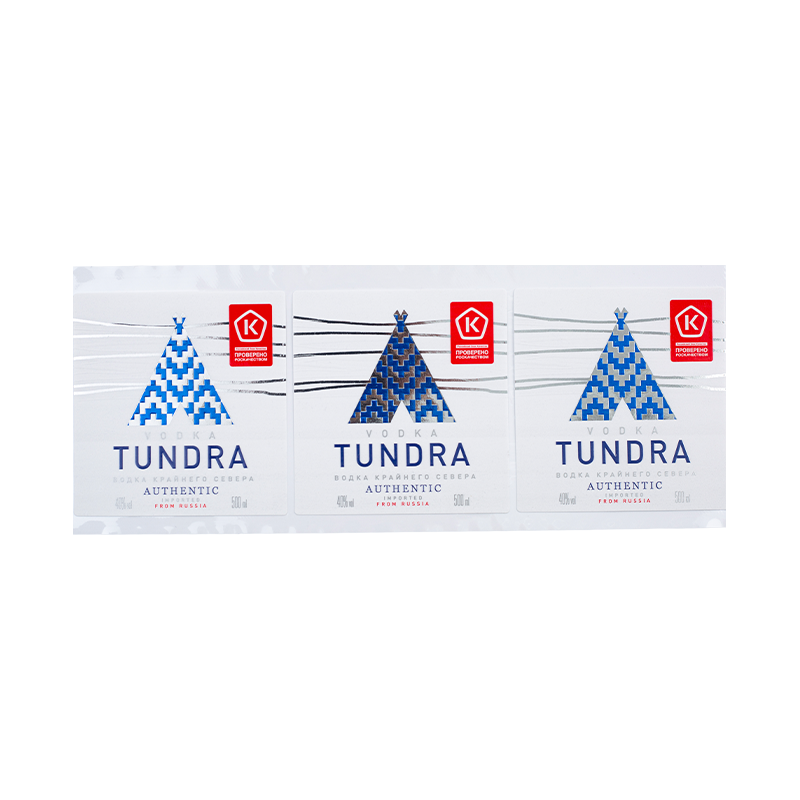
- Facestock and finish. The label face can be paper, PET film, or metallic foil. Paper gives a natural, craft feel; film resists moisture; foil can double as part of the antenna design. The choice must always be verified against the NFC inlay beneath it.
- Adhesive. A permanent acrylic adhesive is the safest default for glass, but bottles that sit in ice buckets, move through cold chains, or face rough handling need a moisture-resistant or high-tack grade. Promotional runs may require a removable adhesive that leaves no residue.
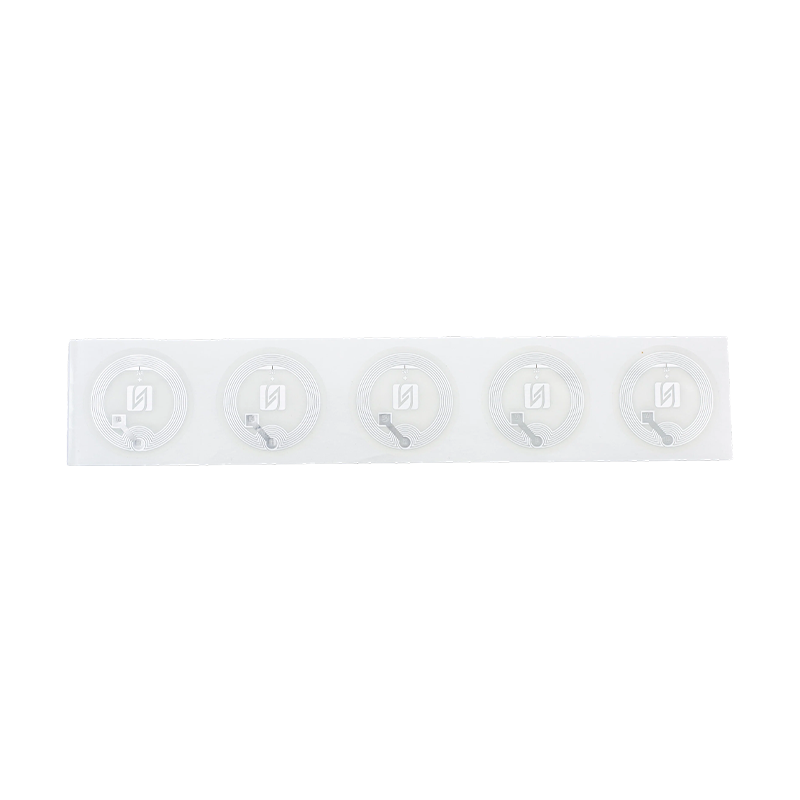
- Inlay and antenna geometry. The shape of the etched aluminum antenna governs where on the bottle the tag reads most reliably. Round inlays suit bottle caps and bases; rectangular inlays suit front panels and neck labels. Antenna design is always matched to the real bottle.
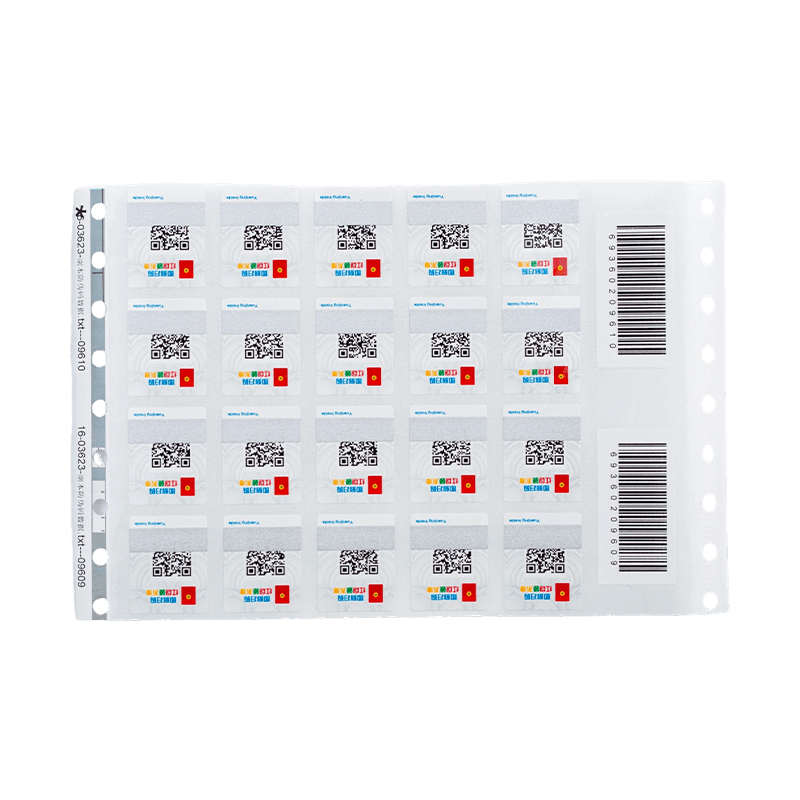
- Encoding and security. The chip can be delivered with a fixed URL, a unique serialized number, or cryptographic authentication. For anti-counterfeit use, the supplier should support locked or encrypted memory areas so the data cannot be overwritten.
- Printing and decoration. Offset and digital printing, hot-foil stamping, embossing, and matte or gloss varnish can be applied without impairing the NFC function, provided the lamination sequence is engineered correctly.
What to Check Before Placing a Production Order
Buying custom NFC labels for wine and spirits is not the same as ordering ordinary packaging labels. Because the tag communicates through radio frequencies, the label must be tested on the actual bottle. Check these points before committing to full-scale production:
- Bottle and content interference. The liquid inside, the thickness of the glass, and any metal foil capsules all affect RF performance. Test with filled bottles, not empty ones, and across every SKU that will carry the tag.
- Environmental conditions. If the bottle passes through cold warehouses, humid shipping routes, or long summer storage, the adhesive and facestock must survive the entire journey. Ask the supplier for material recommendations for each target market.
- Read-range expectations. NFC reads at close range by design. If the brand wants to scan pallets from a distance, UHF RFID, not NFC, is the correct tool. Choose the frequency according to the job, not the trend.
- Production-speed behavior. Wine and spirits lines run fast. A label that behaves well in a hand-applied trial can fail on a high-speed rotary applicator. Confirm that the label's rigidity, thickness, and adhesive tack are compatible with the line.
Why the Manufacturer's Production and Quality Setup Matters
NFC labels sit at the intersection of decorative label printing and RFID technology. A wine label must look right under retail lighting, and a smart label must read consistently on every bottle. When both capabilities exist in one factory, integration is easier and risks are lower.
Shanghai Rongyang Industrial Development Co., Ltd. is one such manufacturer. The company produces pressure-sensitive labels and RFID smart labels in the same facility, with in-house research, design, production, and testing. It runs a dedicated wine and spirits label category and supplies both HF (including NFC) and UHF RFID products at three levels: inlay, label, and finished tag.
For a wine or spirits buyer, the relevant point is the unified quality system. Because the decorative label and the NFC inlay are processed in one place, material selection, die-cutting, lamination, and encoding can be coordinated from the start. The company's quality control covers every step from raw material to finished product, which matters when one defective tag can mean an unverifiable bottle.
The business case for custom NFC tag labels comes down to three things: protection, engagement, and visibility. Protection means counterfeit bottles become a managed risk instead of a vague concern. Engagement means the consumer experience extends beyond the shelf. Visibility means the brand knows where every bottle goes. These benefits compound when the label and the technology are designed together. For a wine or spirits brand considering smart packaging, the first step is not choosing a chip. It is choosing a supplier that can bring the label, the inlay, and the quality system together.

Messae Us Right Now!

- Quick Links
- Products
- Quality Control
- Our Story
- News
- Contact
- Our Product
-
- Beauty and Personal Care Labels
- Home cleaning and laundry care labels
- Liquor and Beverage Labels
- Food and dairy product labels
- Healthcare Labels
- Promotional and Interactive Labels
- Specialty and industrial solution
- Labels Thermal printing and logistics labels
- Anti-counterfeiting traceability and RFID Labels
- Contact us
- Tel:+86-573-86867861
- Phone:+86-18621872035
- E-mail:allen.men@rylabel.com
- Add:No. 111 Xincheng Road, Haiyan Economic Development Zone, Jiaxing City, Zhejiang Province


