
 English
  русский
  Español

Home / News / Industry News / Adhesive Label Materials: A Buyer's Guide to Selecting the Right Combination
News

Adhesive Label Materials: A Buyer's Guide to Selecting the Right Combination
2026-09-08
A label fails in one of three places: the face material, the adhesive, or the liner. In practice, most performance problems are not caused by a single bad material. They are caused by a mismatch between the label construction and the surface it is applied to. After manufacturing pressure-sensitive labels for food, beverage, pharmaceutical, and logistics customers, the conclusion is straightforward: define the substrate, the environment, and the required service life before you choose your materials. Do that, and most adhesion failures are avoidable.
A Label Is a Three-Layer System
Every pressure-sensitive label is a three-layer construction. The facestock carries the printed design and provides the visible surface. The adhesive forms the bond between the label and the container. The liner protects the adhesive until the label is applied. Changing any one of these layers changes how the other two perform. A paper facestock with a permanent acrylic adhesive behaves differently from the same adhesive paired with a PET film, because the facestock controls how much stress reaches the adhesive when the container flexes, cools, or is squeezed. For this reason, suppliers talk about label constructions, not single materials.
The liner, though often overlooked, matters just as much. Glassine paper handles standard automatic application well, while film liners support higher speed production and more labels per roll. The right liner affects converting efficiency, application reliability, and inventory cost. Every layer is a decision.
Facestock Options: Paper, Film, and Specialty Grades
For most packaging applications, the facestock decision comes down to three questions. Will the label see moisture? Will it need to conform to a curved or squeezable surface? And does it have to survive for more than a year? The answers separate paper from film, and film from specialty materials.
Paper is economical, prints well, and is adequate for dry, short-lifecycle applications such as shipping labels, retail price marks, and many dry food packages. Its weakness is moisture. Once wet, paper facestocks lose dimensional stability, wrinkle, and can cause the adhesive to release from the top side rather than from the liner.
Film facestocks solve the moisture problem. Biaxially oriented polypropylene (BOPP) is the most common choice for food and beverage labels because it balances print quality, moisture resistance, and cost. Polyester (PET) adds dimensional stability and chemical resistance, making it popular for cosmetics, household chemicals, and pharmaceutical labels. Polyethylene (PE) suits squeezable containers because it flexes with the package without curling or delaminating. Vinyl offers durability and conformability for outdoor and industrial use.
Specialty materials cover the applications where paper and standard films cannot go. Polyimide and aluminum-based constructions withstand high temperatures and aggressive chemicals, so they appear on industrial components, electronics, and automotive parts. They cost substantially more than paper or BOPP, so they should be specified only when the service condition actually demands them.
| Facestock | Typical Applications | Main Limitation |
|---|---|---|
| Paper | Dry goods, shipping labels, retail price labels | Moisture sensitivity |
| BOPP | Food and beverage, consumer goods | Surface treatment required for some inks |
| PET | Cosmetics, chemicals, pharmaceuticals | Higher cost and stiffness |
| PE | Squeezable personal care and household bottles | Lower dimensional stability |
| Vinyl | Outdoor, industrial, durable marking | Higher cost and recyclability concerns |
| Polyimide | High-temperature electronics and components | High unit cost |
Adhesive Types: Matching the Bond to the Surface and the Service Life
The word "permanent" can mislead buyers. A permanent adhesive is not necessarily the strongest adhesive; it means the bond is designed to last for the product's intended lifetime. Removable adhesives are not weak either. They are formulated with a controlled level of anchorage that allows the label to be peeled cleanly within a defined window. The real distinction between adhesive types is how they interact with the surface energy of the substrate.
Low-surface-energy plastics such as polyethylene and polypropylene offer little for an adhesive to grip. They require adhesives with higher tack, usually based on rubber or specially formulated acrylics. High-surface-energy surfaces such as glass and metal allow the adhesive to wet out completely, which means a standard permanent acrylic can develop a strong bond over time.
Chemistry also matters. Acrylic adhesives are durable, UV-resistant, and clear, making them the default for long-life labels and outdoor use. Rubber-based adhesives build high initial tack quickly, which helps on corrugated board and low-energy plastics, but they can yellow and degrade faster under direct sunlight. Silicone adhesives cover niche cases such as extreme low-temperature and release applications.
| Adhesive Type | Common Use | Key Selection Criterion |
|---|---|---|
| Permanent | Brand labels, barcode labels | Bond strength maintained over service life |
| Removable | Price stickers, temporary promotions | Clean release within a defined period |
| Repositionable | Reusable labels, multi-use packaging | Repeated lifting without residue |
| High-tack | Low-energy plastics, corrugated cases | Immediate bond on difficult surfaces |
| Freezer / cryogenic | Frozen food, laboratory samples | Adhesion performance below 0°C |
| Wash-off | Returnable bottles, reusable containers | Adhesive degrades in caustic wash |
| Void / tamper-evident | Security seals, warranty labels | Destructive failure on removal |
Surface Energy, Temperature, and Time: The Variables That Decide Success
Every adhesion issue seen on production lines can be traced to at least one of four variables: surface energy, temperature, moisture, or dwell time. Surface energy determines whether the adhesive can wet the substrate. Temperature determines whether the adhesive can flow at the moment of application. Moisture attacks both the facestock and the bond line. Dwell time determines how much of the ultimate bond strength has been reached.
Application temperature and service temperature are different specifications. A label applied in a cold storage room may not reach full adhesion if the adhesive has a higher minimum application temperature. The bond often improves once the label moves to room temperature, but the first hours still matter. If the label is handled or shipped before the bond develops, it may shift or peel.
Bond strength builds over time. A label can look well adhered one hour after application and still fail a week later if the adhesive never developed its full anchorage. The reliable approach is to apply the label to the actual container, condition it in the actual operating environment, and inspect it after 24 hours, after 72 hours, and after a full week.
How Industry Requirements Narrow the Material Choice
Once the surface and service environment are defined, industry requirements quickly remove most options.
Food and beverage labels typically combine BOPP or PE facestocks with permanent acrylic adhesives, or freezer adhesive grades for frozen products. Material compliance matters too: label materials used on food packaging must meet the relevant food contact regulations for the market of sale.
Personal care and cosmetics favor PET facestocks with good opacity and a smooth surface for premium printing. The adhesive choice depends on the container material and on whether the customer wants the label removable after use.
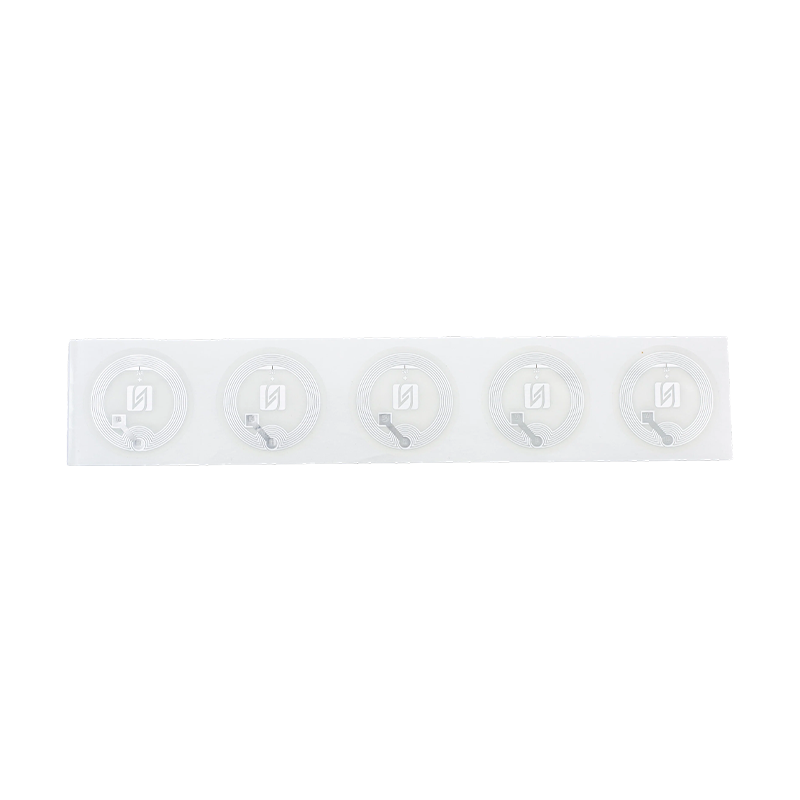
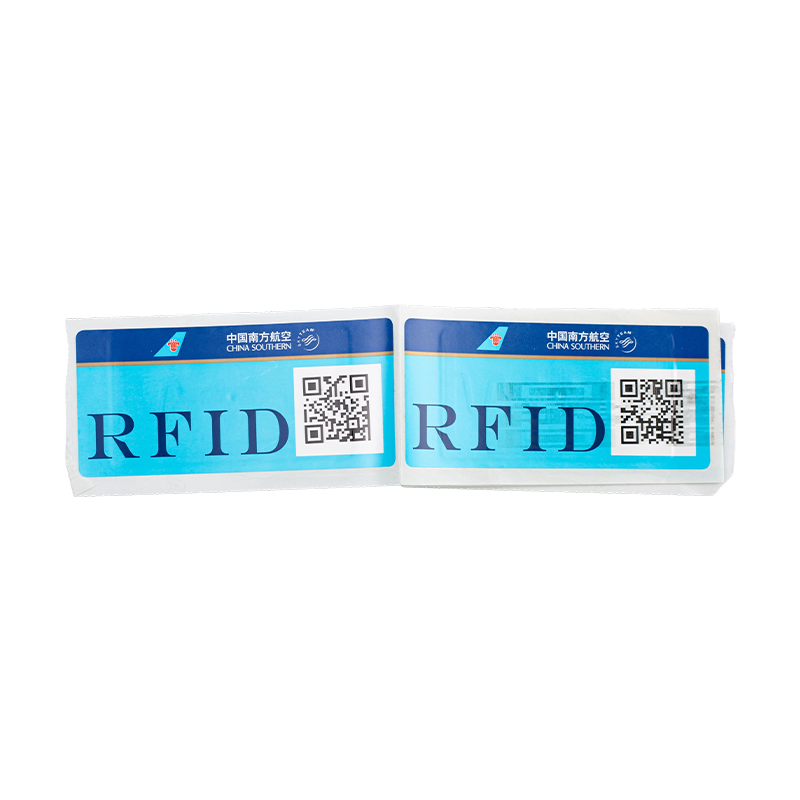
Medical and pharmaceutical labels place a premium on dimensional accuracy, readable barcodes, and compatibility with sterilization processes. A stable film facestock with a permanent adhesive is common, and lot-level tolerance in die-cutting matters more than in most consumer goods. When an RFID inlay is part of the label, the construction must also maintain a flat profile so the inlay does not interfere with adhesive contact.
Logistics labels, including thermal transfer and shipping labels, are often paper-based but need a high-tack permanent adhesive that grips corrugated board, dust, and lightly textured surfaces. In uncontrolled warehouses, the label must hold through humidity and temperature swings.
Industrial and automotive labels, by contrast, typically use vinyl, PET, polyimide, or aluminum facestocks with solvent-resistant or high-temperature adhesives. In these applications, the label cost is no longer a unit-cost question; it becomes a warranty-risk question.
Four Checks Before You Commit to a Label Material
Buyers do not need a laboratory to avoid the most common label failures. Four simple checks are enough.
- Apply the label to the actual container, not to a flat test panel. Curved, textured, or slightly dusty surfaces change results.
- Simulate the environment. Put the labeled container in the freezer, the warehouse, or the delivery vehicle it will actually travel in.
- Respect dwell time. Check the bond after 24 hours, after 72 hours, and after seven days. An early pass does not guarantee a lasting bond.
- Verify converting tolerances. A dimensionally unstable label material causes misregistered die-cutting, which appears as inconsistent gaps between labels on the roll.
Make Material Decisions from Data, Not Assumptions
A label material is only as good as the data used to select it. Surface type, service temperature, moisture exposure, dwell time, and required service life are the five variables that determine whether a label sticks, stays, and releases as intended. When those variables are defined at the start, the label supplier can specify the right construction, test it, and deliver it without surprises. When they are discovered on the production line, the failure cost is always higher than the material cost.

Messae Us Right Now!

- Quick Links
- Products
- Quality Control
- Our Story
- News
- Contact
- Our Product
-
- Beauty and Personal Care Labels
- Home cleaning and laundry care labels
- Liquor and Beverage Labels
- Food and dairy product labels
- Healthcare Labels
- Promotional and Interactive Labels
- Specialty and industrial solution
- Labels Thermal printing and logistics labels
- Anti-counterfeiting traceability and RFID Labels
- Contact us
- Tel:+86-573-86867861
- Phone:+86-18621872035
- E-mail:allen.men@rylabel.com
- Add:No. 111 Xincheng Road, Haiyan Economic Development Zone, Jiaxing City, Zhejiang Province


