
 English
 русский
 Español


Home / News / Industry News / What Does RFID Stand For? A Clear Guide to Radio Frequency Identification
News

What Does RFID Stand For? A Clear Guide to Radio Frequency Identification
2026-10-22
RFID stands for Radio Frequency Identification. In plain English, it is a wireless way to identify an object by reading data from a small electronic tag with radio waves. You do not need a direct line of sight, and you can often read many tags at once. That simple idea is why RFID now appears in everything from luggage handling and retail stock counts to access cards, library books, and anti-counterfeiting labels.
What Does RFID Stand For?
The acronym breaks into three useful parts. Radio frequency refers to the part of the electromagnetic spectrum used to send and receive signals. Identification is the purpose: giving an item, animal, or person a unique identity that can be read electronically. Put together, RFID describes a technology family, not one single product. A tag may be a stiff plastic disc, a paper-thin inlay, a key fob, or a printed label with a tiny chip and antenna hidden inside.
People sometimes confuse RFID with barcodes or with NFC. RFID is the broader idea; NFC is a short-range technology that uses RFID principles, usually at 13.56 MHz. A barcode still has its place, especially where cost and simplicity matter most. RFID earns its place when you need faster reads, more data, or identification without aiming a scanner at a printed line.
How an RFID System Works
Most systems have four practical parts: a tag or smart label, a reader, an antenna, and software. The tag holds a small chip and an antenna. The reader sends out a radio signal; a passive tag uses that energy to wake up and send back its stored information. An active tag has its own battery and can transmit over longer distances. The software then turns the read into something useful, such as a stock count, a gate entry, a shipment status, or a verification result.
In our label work, the most familiar form is the smart label: an RFID inlay laminated into a pressure-sensitive label so it can be printed, applied, and scanned like a normal label. That sounds simple, but the details matter. The antenna design, chip choice, adhesive, face material, and printing process all affect whether the finished label reads reliably in the real world.
RFID Frequencies and Tag Types
RFID is not limited to one frequency. The band you choose affects read range, tag size, performance near metal or liquid, and cost. The table below is a practical starting point, not a rulebook; a label that works well on a cardboard carton may behave differently on a metal can or a frozen food package.
| Frequency band | Typical read range | Practical strengths | Common examples |
|---|---|---|---|
| LF (125-134 kHz) | A few centimeters | Works near metal and water; mature and stable | Access control, animal ID, some industrial tools |
| HF (13.56 MHz) | Up to about 1 meter | Good for cards, NFC, and medium-range labels | NFC tags, library books, event wristbands, access cards |
| UHF (860-960 MHz) | Several meters, depending on setup | Fast bulk reading and longer range | Retail stock, logistics, warehouse pallets, baggage |
| Active UHF (often 433 MHz or 2.4 GHz) | Tens of meters or more | Self-powered; can support sensors and real-time location | Container tracking, cold chain monitoring, high-value assets |
Passive tags are the most common in labels because they have no battery and can last for years. Active tags cost more, but they can monitor temperature, movement, or location over longer distances. Semi-passive tags sit between the two, using a battery to support sensors while still relying on the reader for communication.
RFID Tags, Inlays, and Smart Labels
Three terms are often used loosely. An inlay is the bare chip-and-antenna assembly. A tag is the inlay packaged for a specific use, perhaps inside a plastic shell or attached to a strap. A smart label is an inlay combined with label materials, adhesive, and printing. For brand owners, the smart label is often the most practical form because it fits existing packaging and printing workflows.
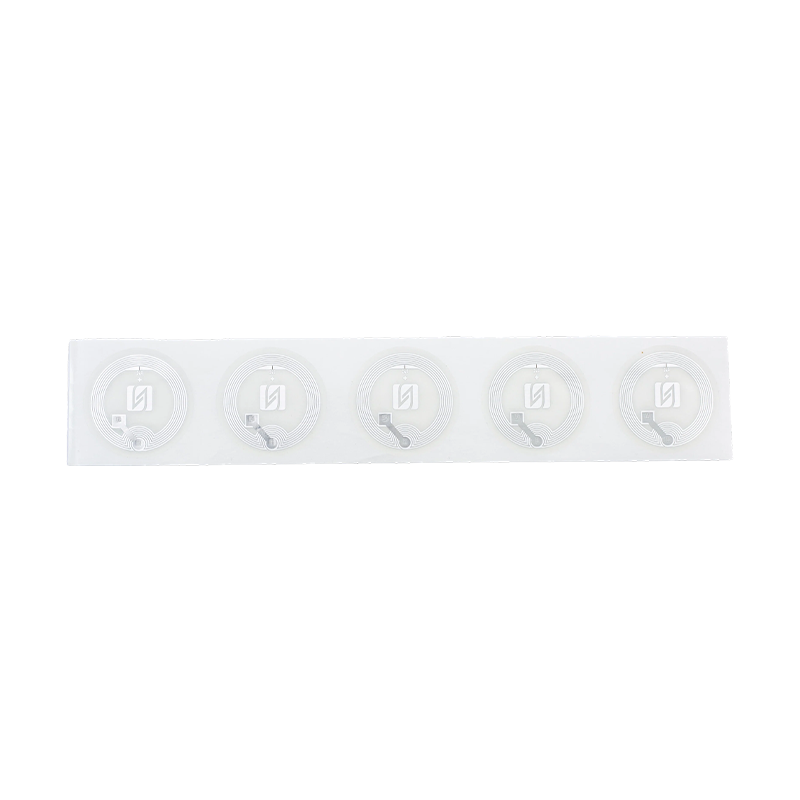
RFID labels are not only for inventory. They can support authentication, tamper evidence, consumer interaction, and traceability. A small NFC label on a bottle, for example, can let a shopper tap a phone to check a product story or verify a code. The same principle can be used in a warehouse, where a UHF label helps a team count cartons without opening every box.
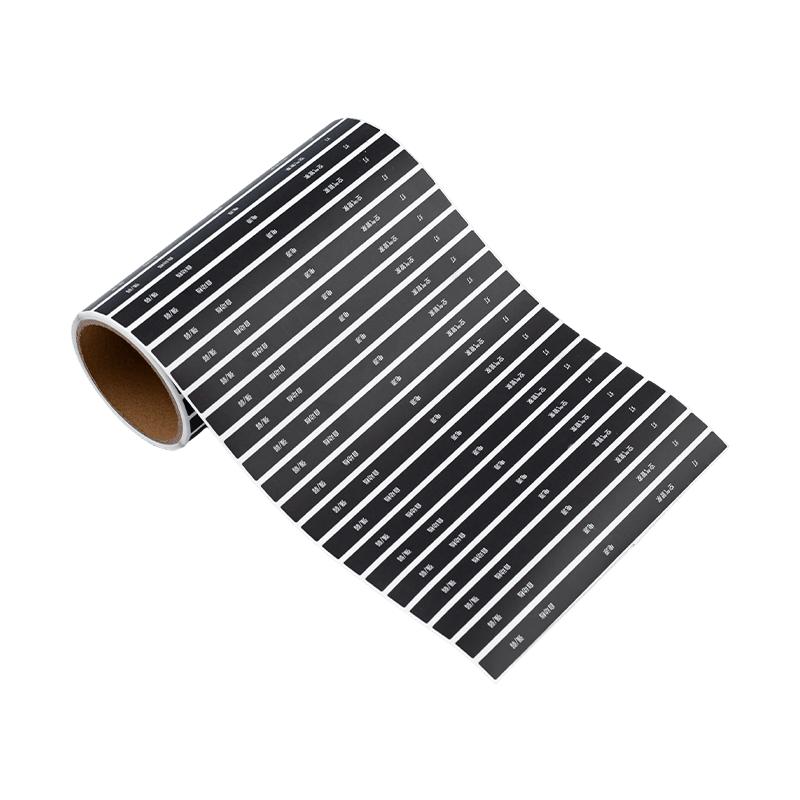
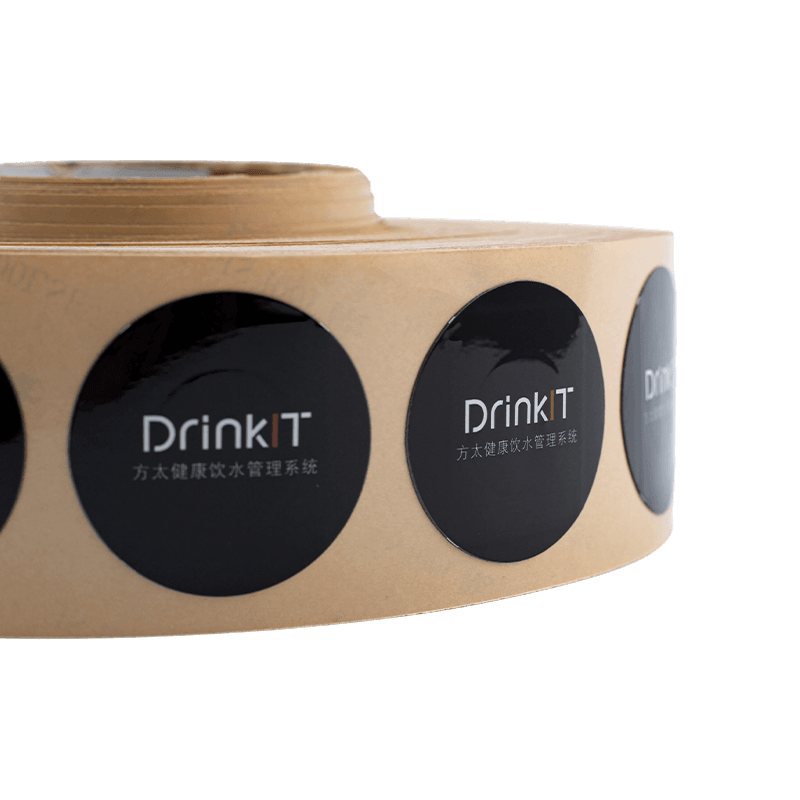 NFC Anti-Counterfeiting and Interactive Brand LabelsAdhesive or packaging-integrated HF NFC labels let shoppers tap a smartphone to verify authenticity and access traceability or promotional content.View Product →
Where RFID Is Used
RFID shows up wherever a business needs faster, more reliable identification. Common examples include:
- Retail stock counts and shelf availability
- Airline baggage and parcel sorting
- Warehouse picking and asset tracking
- Access control, events, and library returns
- Anti-counterfeiting and product authentication
In manufacturing, tags can link a component to its work order or service history. In healthcare, they can help track equipment and supplies. In events, wristbands can replace paper tickets. In anti-counterfeiting, a tag or label can carry a unique identity that is hard to copy and easy to verify.
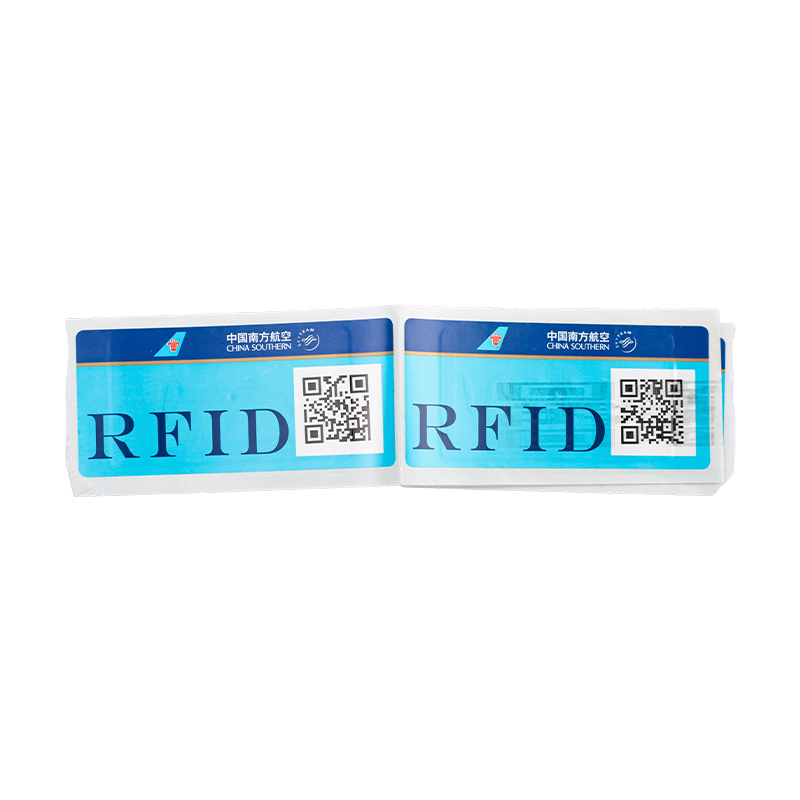
Logistics is one of the clearest use cases. A durable RFID label on a tote, pallet, or bag can be read as it passes a gate, reducing manual scanning and making exceptions easier to spot. The label still has to survive handling, weather, and repeated contact, which is why material selection matters as much as the chip inside.
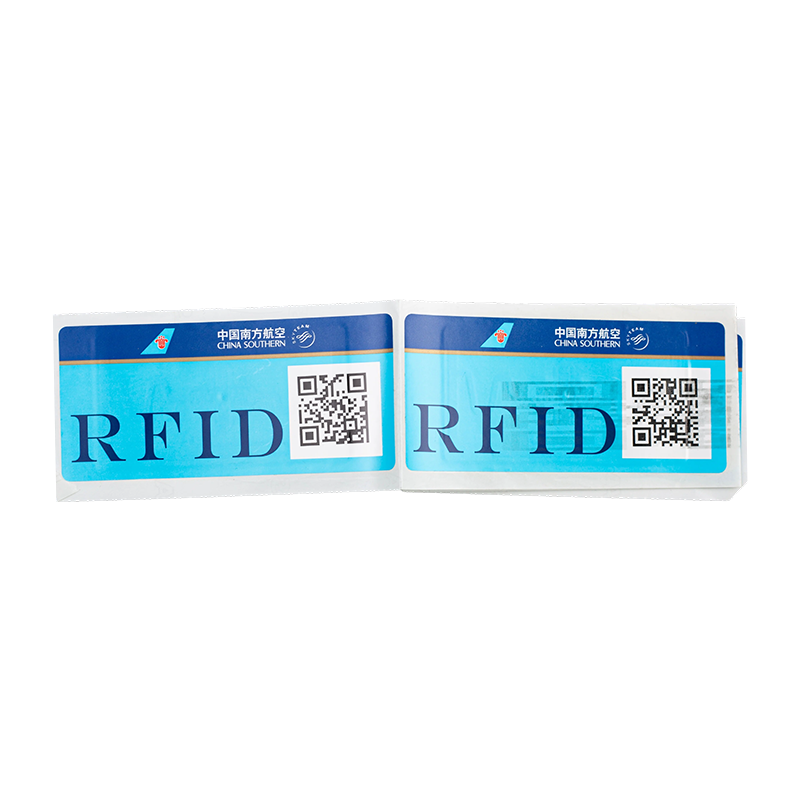 Aviation and Logistics RFID Tracking LabelsDurable UHF RFID labels support real-time tracking of baggage, cargo, and logistics units, with resistance to metal and liquid interference in complex environments.View Product →
RFID vs Barcodes: What Is Different?
Barcodes are optical. A scanner must see the printed symbol, and usually one symbol is read at a time. RFID is radio-based. A reader can capture many tags in a second, often without direct line of sight, and a tag can carry more than a printed number. RFID tags can also be read-write, so information can be updated after the tag is attached.
That does not make RFID the automatic winner. Barcodes are inexpensive, familiar, and easy to print. RFID makes more sense when labor savings, bulk reading, traceability, or tamper evidence justify the higher tag and equipment cost. Many operations use both: barcodes for low-cost item marking and RFID for pallets, assets, or high-value products.
Practical Considerations Before Choosing RFID
The acronym tells you what the technology is, not whether it will work in your specific case. Metal can detune an antenna. Liquid can absorb UHF energy. Dense packing can cause tags to interfere with one another. Adhesive choice matters on cold, wet, or oily surfaces. Privacy and data ownership also deserve a clear policy, especially when tags can be read by parties outside your own operation.
A sensible starting point is to define the job: What needs to be identified? At what distance? In what environment? Does the tag need to survive heat, chemicals, freezing, or sterilization? Does it need to be tamper-evident or consumer-facing? Once those answers are clear, the frequency, chip, antenna, and label construction become much easier to narrow down.
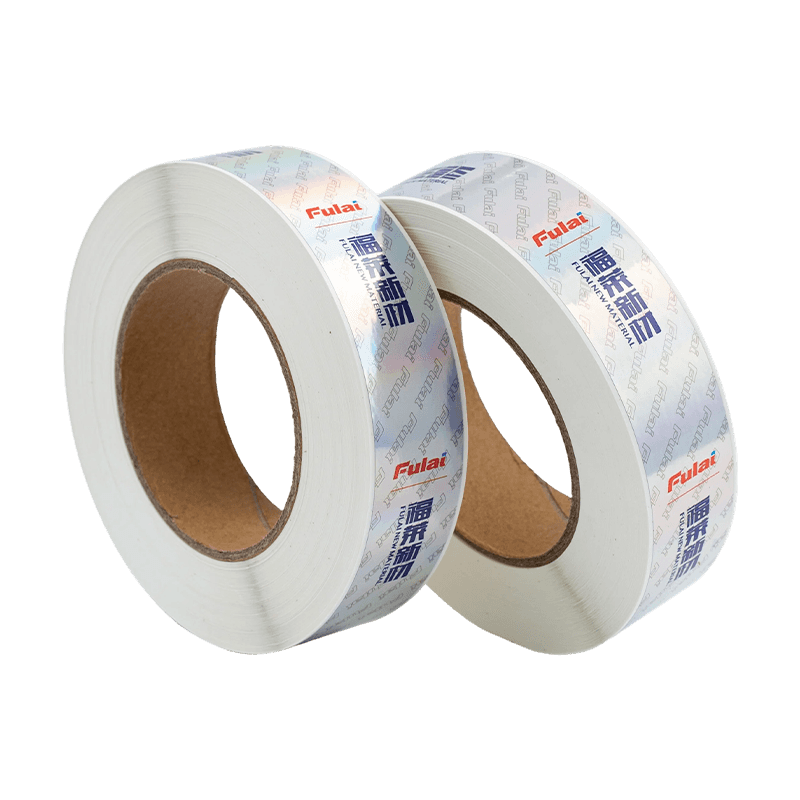
For brand protection, the label itself can do more than carry a number. It can combine a secure print element, a tamper-indicating layer, and an RFID or NFC inlay so that verification is both visual and electronic.
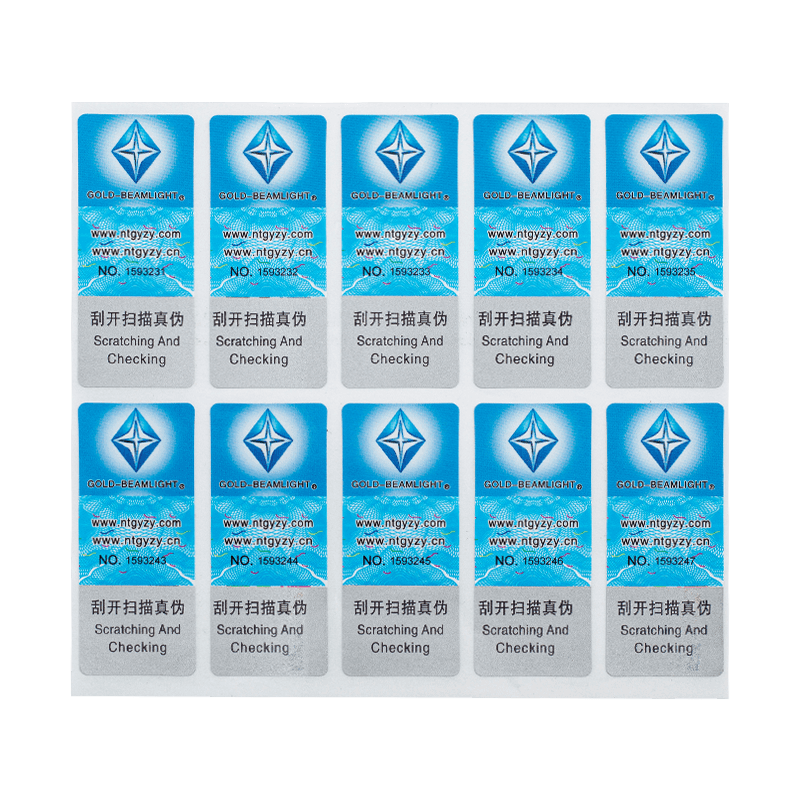 Integrated Brand Protection and Traceability LabelsCombines holographic, microtext, and special-ink features with RFID/NFC, QR codes, and blockchain certificates for product identity and traceability.View Product →
A Simple Way to Remember RFID
If you remember only one line, make it this: RFID stands for Radio Frequency Identification, and it uses radio waves to identify things automatically. The tag is the identity carrier, the reader is the question asker, and the software turns the answer into a business decision. The rest is engineering: frequency, antenna, materials, and the environment where the label must perform.
We have spent years matching label materials and RFID inlays to real packaging lines, so we tend to look past the acronym and straight to the application. If you are exploring a project, you can see related label samples at industry exhibitions, and our practical guide to anti-counterfeiting and traceability labels goes further into supply chain use cases.


Messae Us Right Now!

- Quick Links
- Products
- Quality Control
- Our Story
- News
- Contact
- Our Product
-
- Beauty and Personal Care Labels
- Home cleaning and laundry care labels
- Liquor and Beverage Labels
- Food and dairy product labels
- Healthcare Labels
- Promotional and Interactive Labels
- Specialty and industrial solution
- Labels Thermal printing and logistics labels
- Anti-counterfeiting traceability and RFID Labels
- Contact us
- Tel:+86-573-86867861
- Phone:+86-18621872035
- E-mail:allen.men@rylabel.com
- Add:No. 111 Xincheng Road, Haiyan Economic Development Zone, Jiaxing City, Zhejiang Province


