
 English
  русский
  Español

Home / News / Industry News / Radio Frequency Identification Explained: How RFID Labels Work in Practice
News

Radio Frequency Identification Explained: How RFID Labels Work in Practice
2026-10-10
Radio frequency identification has a habit of sounding more complicated than it really is. Strip away the acronyms and the technology does something quite simple: it lets a reader identify an object with radio waves, without anyone scanning a barcode by hand or opening a carton to see what is inside. If you have watched a suitcase being tagged at an airline counter, tapped your phone on a poster to open a web page, or seen a warehouse crew count a full pallet in seconds, you have already met RFID at work.
We have been making labels for years, including the smart labels that carry these tiny chips, so we tend to look at radio frequency identification from a practical angle. The physics gets the attention, but on the production floor it is usually the label itself - the material, the adhesive, the position of the inlay - that decides whether a project flies or quietly stalls.
What Radio Frequency Identification Actually Is
Radio frequency identification is a method of automatic identification in which data stored on a small electronic tag is read, and often rewritten, through electromagnetic fields. Unlike a printed barcode, no line of sight is needed, and a single reader can capture dozens or hundreds of tags in one pass.
Three parts do all the work
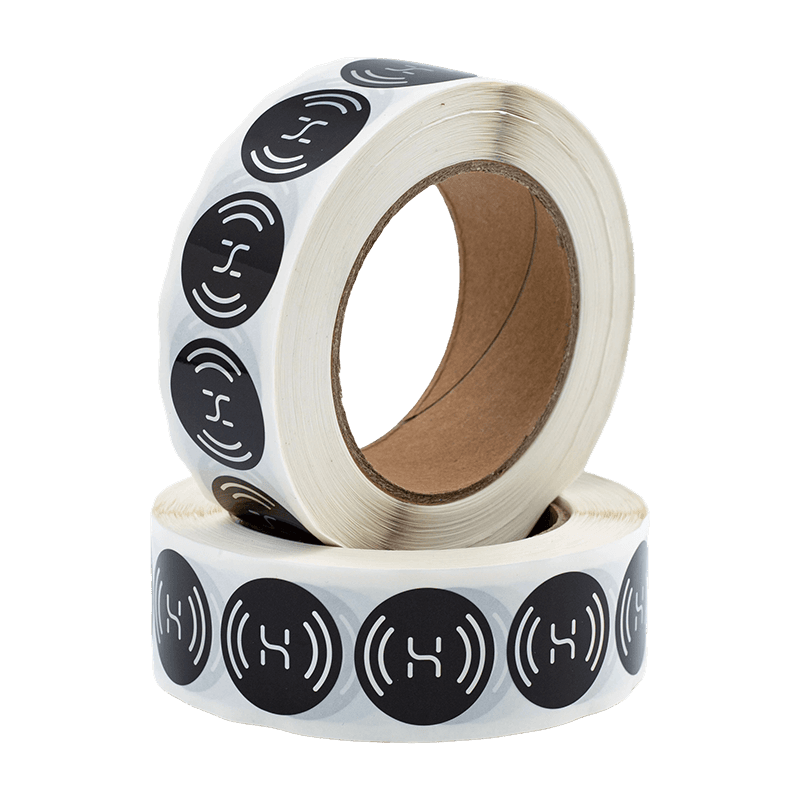
- The tag, sometimes called a transponder: a microchip bonded to an antenna. It is usually built first as an inlay, a thin sandwich of chip, antenna and carrier film, which a converter then turns into a printed, adhesive-backed label.
- The reader: a fixed portal, a handheld gun or a small embedded module that transmits a signal and listens for replies.
- The antenna and software layer: antennas shape the read field, while middleware filters the incoming data and passes it to a retail, warehouse or asset system.
How a read happens
A passive tag carries no battery. As it enters the reader's field it harvests a little energy from that signal, powers up its chip and reflects a modulated answer back. The reader decodes the identifier, and the software decides what to do next. The exchange takes milliseconds, which is why a portal at a dock door can log a truckload of cartons while the vehicle keeps rolling.
Frequency Bands: LF, HF and UHF
RFID is not one technology but a family, separated mainly by frequency. Each band behaves differently around metal, water and distance, so the choice usually comes down to the environment rather than to personal preference.
| Band | Typical frequency | Read range | Where it fits |
|---|---|---|---|
| LF | 125-134 kHz | Up to about 10 cm | Animal ID, access control |
| HF | 13.56 MHz | Up to roughly 1 m | NFC, ticketing, libraries, authentication |
| UHF | 860-960 MHz | Several meters | Retail inventory, logistics, baggage handling |
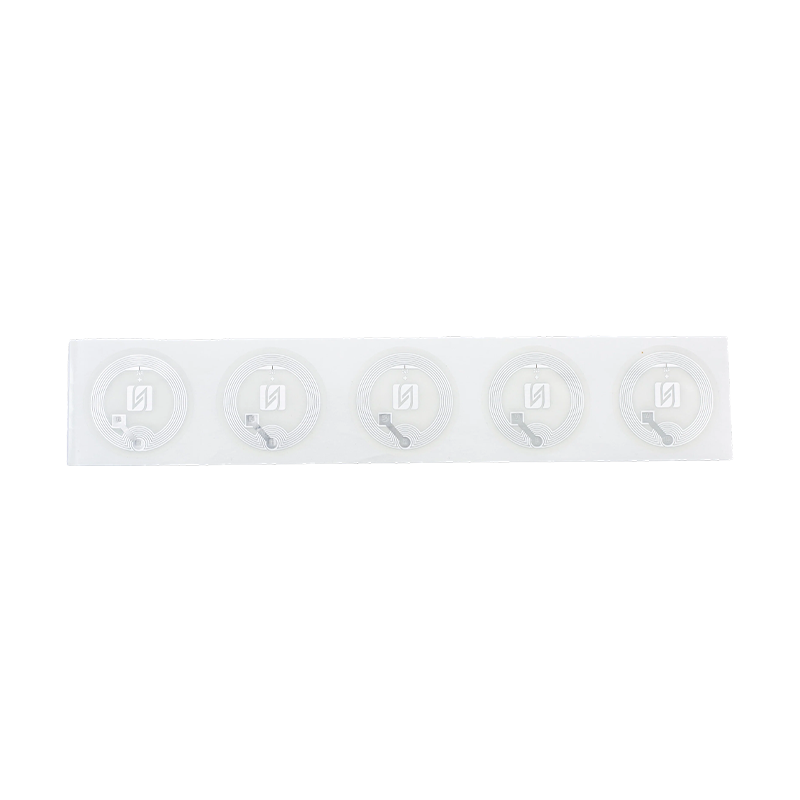
High frequency is the band most consumers have already touched, because NFC lives at 13.56 MHz. That makes HF labels a natural fit for authenticity checks, loyalty campaigns and product stories a shopper can open with a single tap.
 NFC Interactive Marketing Labels for Smart Packaging and Retail EngagementEmbedded NFC labels let brands link physical packaging to websites, traceability, videos, membership, and store content, with rewritable campaigns for tap-based shopper engagement.View Product →
Passive, Active and Battery-Assisted Tags
- Passive tags hold no battery. They are the cheapest and the most common, with read ranges from a few centimeters to several meters, and they last as long as the label survives.
- Active tags carry their own power source and broadcast on their own schedule. They can be read from tens or hundreds of meters away and can report temperature, motion or shock, but cost and battery life become design constraints.
- Battery-assisted passive tags sit in between: a small battery boosts the return signal for longer range, while the tag still answers only when a reader asks.
A rough rule of thumb we share with customers: if the item passes a controlled gate or is handled by people, passive is usually enough. If you need continuous location or sensor data, the conversation moves toward active.
Barcodes, RFID and NFC Compared
| Feature | Barcode | RFID | NFC |
|---|---|---|---|
| Line of sight | Required | Not required | Not required, but very close |
| Read range | Centimeters to a meter | Centimeters to several meters | A few centimeters |
| Multiple items at once | No, one at a time | Yes, hundreds per pass | Typically one |
| Data can be updated | No, print only | Yes, on many tags | Yes, on many tags |
| Typical role | Identification and pricing | Inventory, logistics, traceability | Consumer interaction and verification |
These technologies are neighbours rather than rivals. Barcodes remain the cheapest way to put a number on a package, RFID pays for itself where speed and accuracy matter at volume, and NFC turns a label into a doorway for the customer. Plenty of our customers print a barcode and embed an NFC chip on the very same label.
Where Radio Frequency Identification Earns Its Keep
Retail and inventory accuracy
Cycle counts that once took a team a full day can be finished in an hour, and stock accuracy improves because every item is counted rather than sampled. Better shelf data also means fewer out-of-stocks on the products that matter most.
Logistics, baggage and returnable assets
Pallets, tote boxes, containers and airline baggage all pass through controlled points where a portal can do the counting. A tag that survives a baggage system has to handle flexing, abrasion and a wide temperature range, which is as much a materials question as a chip question.
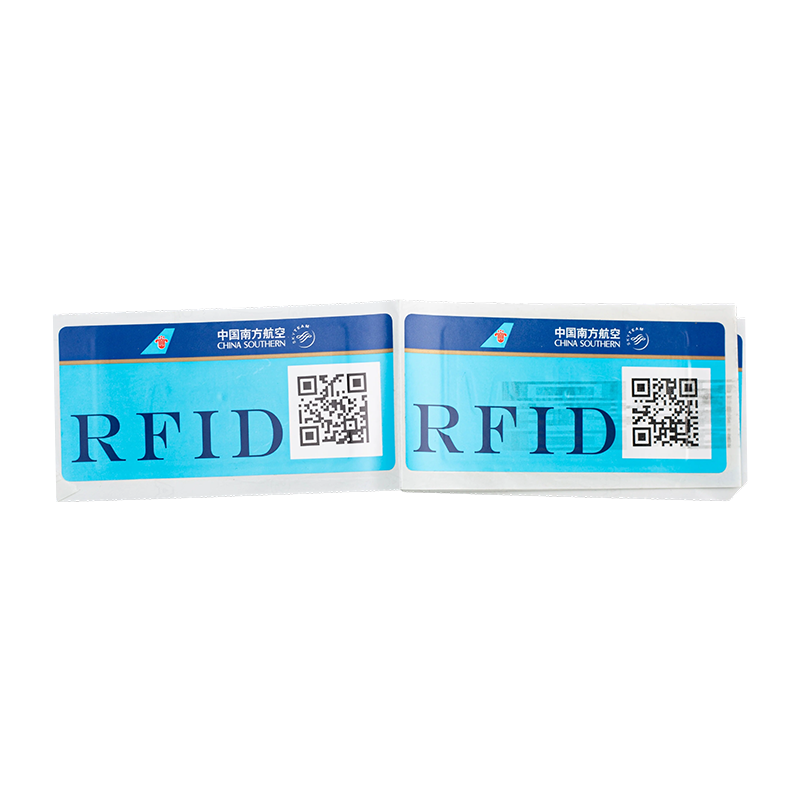 Aviation and Logistics RFID Tracking Labels for Baggage and CargoDurable UHF RFID labels for aviation and logistics tracking support fast, automated identification of baggage and cargo through sorting, loading, transfer, and retrieval.View Product →
Healthcare and pharmaceuticals
Sample tubes, instrument trays and high-value medicines benefit from item-level identification that withstands sterilization and cold storage, and from a record that follows the item rather than the paperwork.
Brand protection and consumer trust
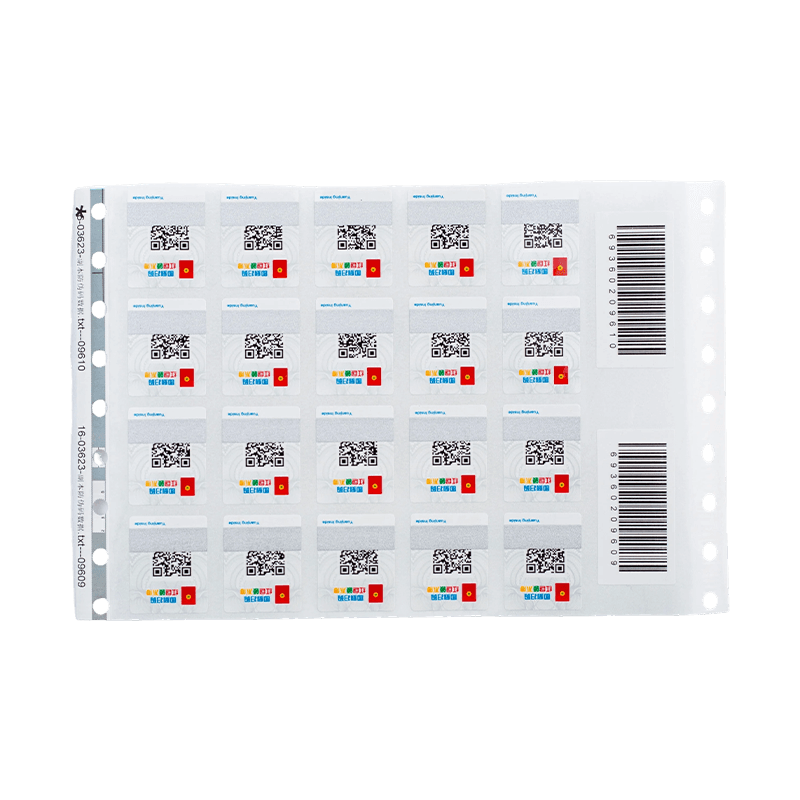
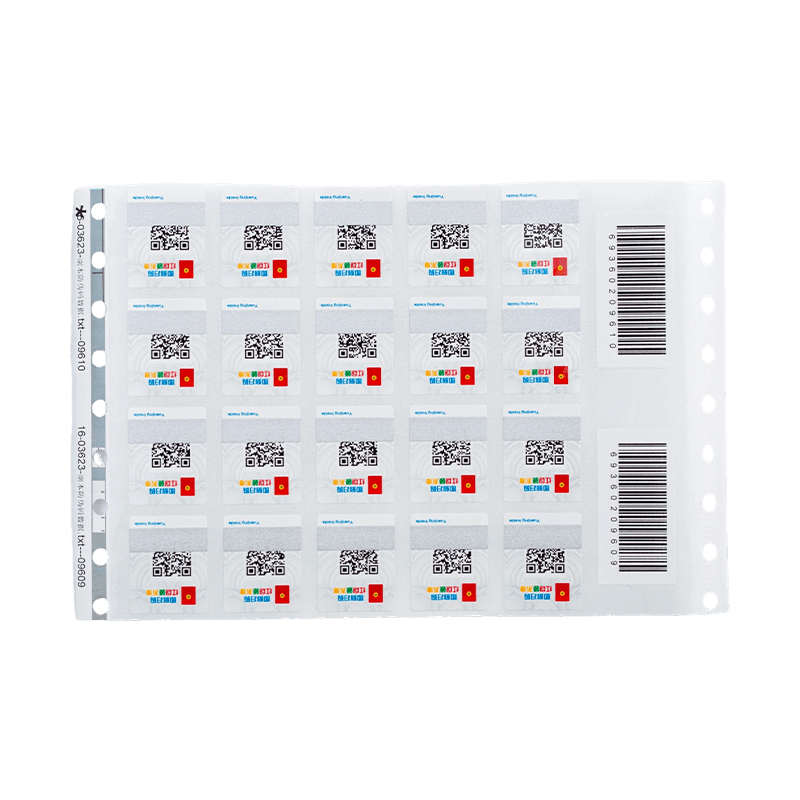
A tag with a unique identifier helps a brand verify genuine stock, spot diverted goods and give shoppers a simple way to check what they bought. For teams working through those decisions, our practical guide to anti-counterfeiting and traceability labels walks through the trade-offs involved.
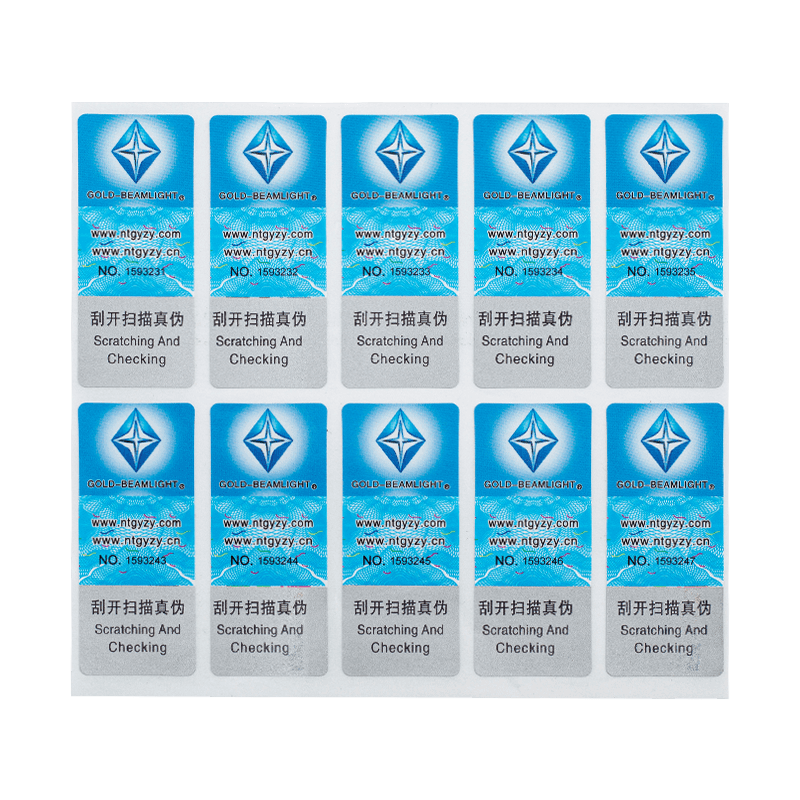 Anti-Counterfeiting and Traceability Labels for Brand ProtectionCombining holographic hot stamping, microtext, special inks with RFID/NFC chips, QR codes, and blockchain certificates, these labels create unique product identities for end-to-end monitoring.View Product →
Why the Label Matters as Much as the Chip
Two teams can specify the same chip and the same frequency and still end up with very different read rates. The gap is almost always in the label construction and the way it is applied.
- Inlay choice: antenna geometry and chip type set the sensitivity, and a small inlay often reads far better on a curved glass bottle than a large one that bends around it.
- Facestock and adhesive: paper, PET, freezer-grade or high-tack adhesives must survive the surface, the temperature and the lifetime of the product.
- Printing and encoding: human-readable text, a barcode or QR code, and the unique ID written during converting, all verified before the roll ships.
- Testing on the real item: metal and liquid detune antennas, so a sample tested on the actual bottle, carton or drum beats any datasheet.
- Converting tolerance: a few millimeters of drift in die-cutting or placement can move performance noticeably.
Because pressure-sensitive label production and RFID conversion sit under one roof for us, customers can order just the inlay, a finished tag, or a printed and encoded label ready for the applicator, in both HF and UHF.
Pitfalls Worth Planning Around
- Metal and liquid. Both pull energy away from the tag. Spacers, on-metal inlays or a different frequency usually solve it.
- Dense tag environments. Hundreds of tags answering at once can collide; reader power, antenna placement and shielding need tuning.
- Frequency chosen on paper. A pilot on real packaging is the only reliable test.
- Software left until last. Data mapping and middleware often decide the go-live date, not the hardware.
- Staff not brought along. Training and clear procedures keep a good system from decaying after launch.
Questions Worth Asking a Label Partner
- Which frequency will actually work on our product, and have you tested it?
- Can you supply inlay, tag and finished label, or only one stage?
- How is each tag encoded and verified before shipment?
- Which adhesive suits our surface, temperature range and shelf life?
- What sample lead time should we plan for?
- How do you handle a read rate that underperforms in the field?
Face-to-face conversations answer these faster than long email threads, which is why we still spend time at trade shows; the events we attend are listed on our exhibition page.
Frequently Asked Questions
What is the difference between RFID and NFC?
NFC is a short-range branch of high frequency RFID, built on the same 13.56 MHz band. The shorter range is deliberate: it keeps a payment or an authentication tap under the user's control, while general RFID is designed to read at a distance.
Can radio frequency identification read through metal and water?
Not easily, and never at full range. Metal reflects the signal and liquid absorbs it, so both reduce read distance. On-metal inlays, spacers and careful antenna placement usually bring performance back to an acceptable level.
How much does an RFID label cost?
It depends on the chip, the inlay, the material and the volume. Simple passive UHF labels sit at the low end, while on-metal, high-temperature or NFC labels cost more. As a rule, the label is a small fraction of the value it protects.
Do RFID tags need a battery?
Most do not. Passive tags draw their power from the reader's signal and last as long as the label stays intact. Only active or battery-assisted tags carry their own power source.
Radio frequency identification rewards preparation. Define what you need to know about each item, test on the real package, and choose materials that match the journey the product takes. If you would like a second opinion on an inlay, an adhesive or a read rate that is not behaving, talk to us early - the label is usually the easiest part of the system to fix, provided it is designed with the rest of the system in mind.

Messae Us Right Now!

- Quick Links
- Products
- Quality Control
- Our Story
- News
- Contact
- Our Product
-
- Beauty and Personal Care Labels
- Home cleaning and laundry care labels
- Liquor and Beverage Labels
- Food and dairy product labels
- Healthcare Labels
- Promotional and Interactive Labels
- Specialty and industrial solution
- Labels Thermal printing and logistics labels
- Anti-counterfeiting traceability and RFID Labels
- Contact us
- Tel:+86-573-86867861
- Phone:+86-18621872035
- E-mail:allen.men@rylabel.com
- Add:No. 111 Xincheng Road, Haiyan Economic Development Zone, Jiaxing City, Zhejiang Province


